Back to Work

N 02 · Embedded Engineers

Healthcare research tool 2022–2025.

A healthcare company had three months to prove an internal research tool worth funding, and no reason to hire permanent staff for a project that might not survive them. We embedded a senior frontend engineer. The first pull request came in week one; more than two years later our engineer had worked across the whole stack, and the finished tool went into maintenance.

Week 1
first pull request
2+ years
on the project, start to finish
Sector
Healthcare · Internal research tool
Location
Fully remote
Duration
3-month MVP · 2+ years
Engagement
Embedded Engineers
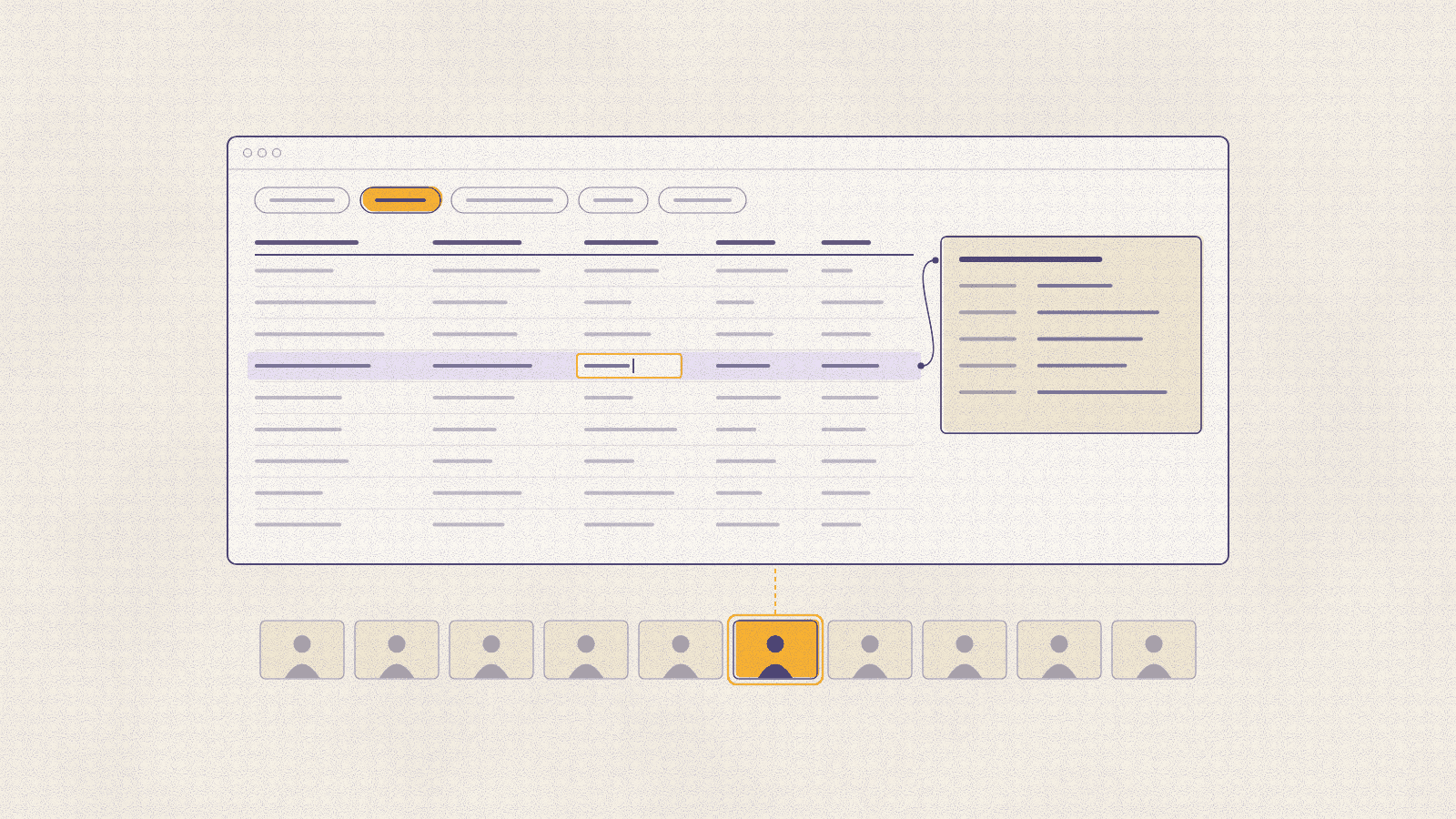
A video call during a sprint demo: a shared screen of linked, editable records with filters above them and one cell being edited, over a strip of ten call tiles with one highlighted as presenting.
A sprint demo, drawn rather than shown: the tool is under NDA, so every record here is a line. Our engineer presented to the people who would use it, every sprint.Illustration

Listen to this case study

0:00 / 5:01

Narrated by A I from the text of this page

Spread 01

A three-month bet.

A healthcare company needed an internal research tool and did not yet know whether it would still want one in a year. The project had three months to earn its funding, and hiring permanent staff for something that might be shelved made no sense. So the company built a core team from its own people and outsourced the rest. We were asked for the frontend.

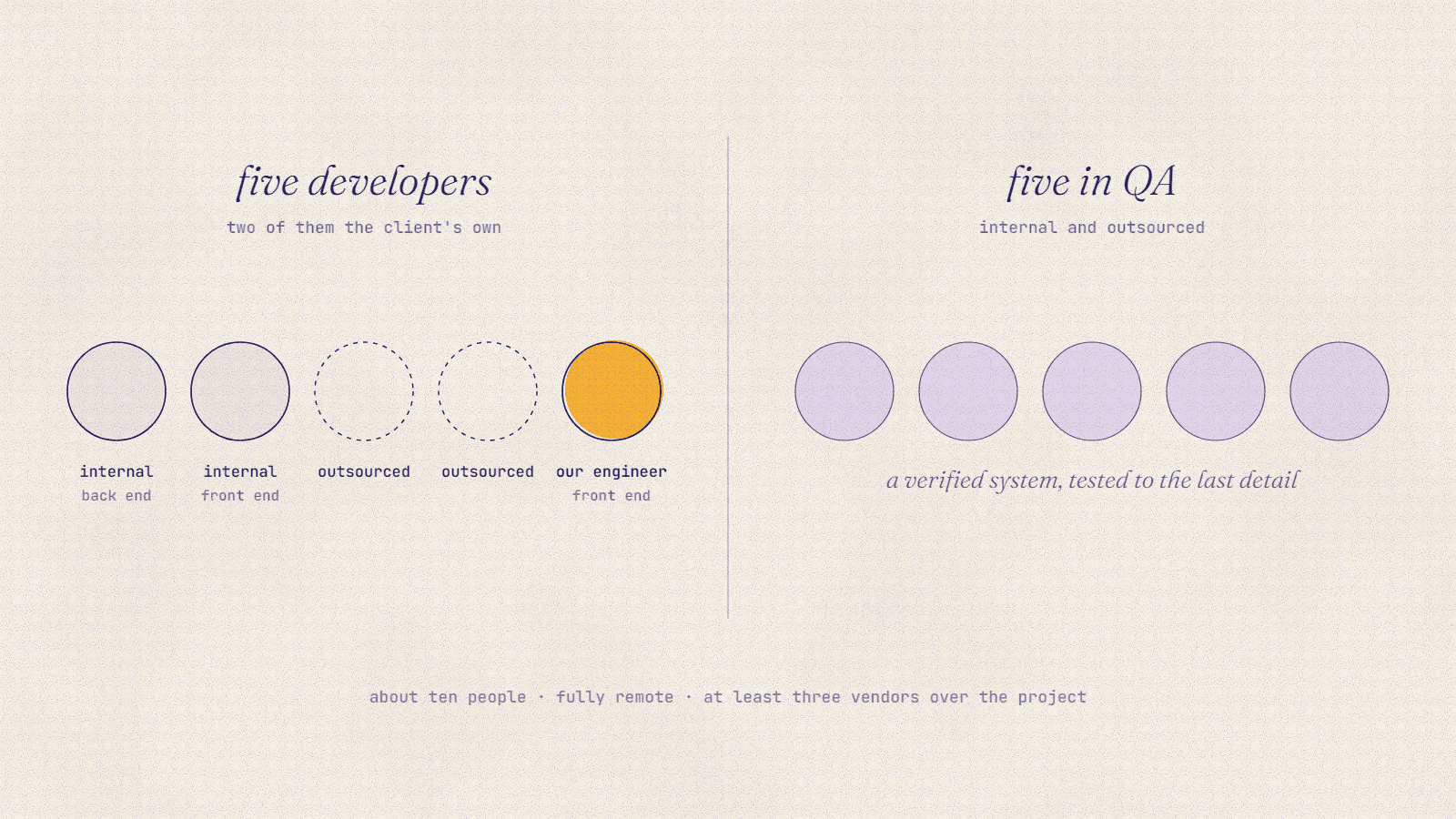
The team came to about ten people, fully remote, from the client and at least three vendors over the life of the project. Half of them were QA. It is a verified system: everything it does is tested to the last detail before anyone relies on it, because the work it supports bears on people's health.

None of the stack was ours to choose: Angular, NgRx and Angular Material in the browser; .NET, MySQL and R behind it; Jenkins for the pipelines and Red Hat OpenShift to run it all. An embedded engineer works in the client's stack and to the client's process, not to their own preferences.

The team at a glance: five developers on one side, two of them the client's own for the back end and the front end, two outsourced, and ours on the front end; five QA on the other, internal and outsourced, for a verified system tested to the last detail.
Fig. 01
About ten people, fully remote, from the client and at least three vendors. The line-up changed a couple of times; our engineer was in it from the first sprint to the last.Diagram

Spread 02

Useful from the first week.

The client interviewed our engineer as it would any hire, and the first pull request came in the first week. On a three-month clock a slow start is not a detail: every week spent finding the way around a codebase is a week the project does not have.

The code was the expected part. What set the work apart was everything around it: our engineer learned what the tool was for and who would use it, asked the questions that changed what got built, and came back with suggestions that made sense to the people who would rely on it.

Spread 03

A great deal of data, linked and editable.

The heart of the frontend was the data: a great deal of it, linked across records, and editable by the people using it. How it was displayed and filtered would decide whether the tool worked for them at all, and that is where our engineer's biggest contributions went, worked out together with the UX team.

The aim was screens that are easy to use and practical to build, because a design that cannot be built well is not finished. NgRx kept the state of those screens in one predictable place as they grew, and Angular Material supplied the controls, so the effort went into how people find, follow and change their data rather than into building widgets.

Spread 04

In the room every sprint.

Every sprint ended with a demo to the development team and the stakeholders: the client's own staff, who would use the tool every day. Our engineer was the strongest presenter on the team, which matters more than it sounds. A demo is where the people who will live with a tool say whether it is the right one, while their feedback is still cheap to act on.

Spread 05

From the frontend to the whole stack.

The three months passed and the project went ahead. The contract was extended by a year, and our engineer was given full ownership of the frontend; the client's own frontend developer moved on to other internal work. That is the decision an embedded engagement exists to earn.

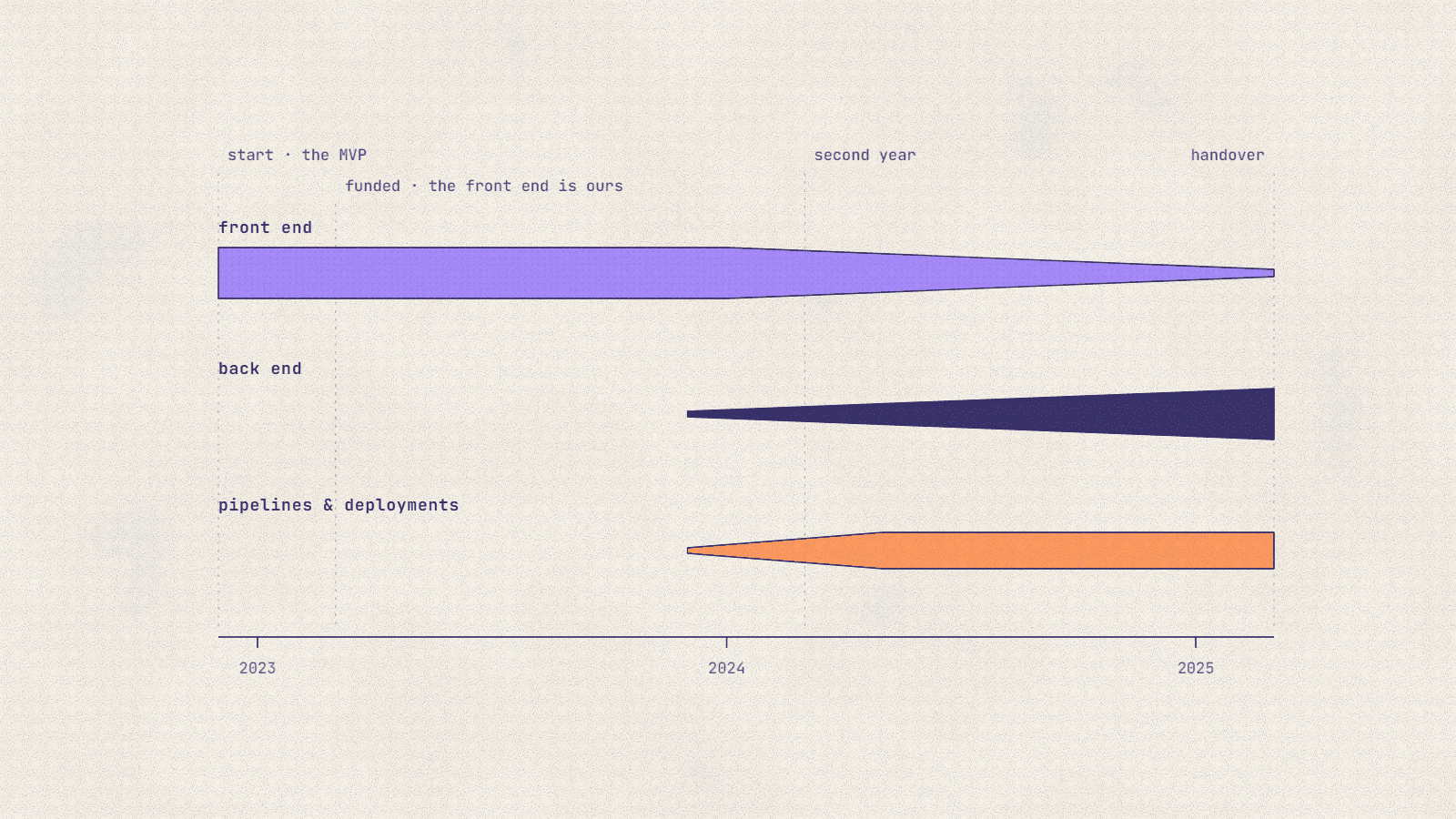
Midway through, the frontend work began to run out. Rather than let one engineer go and hire another, the client kept ours, who was already helping on the other side of the stack: .NET features and bug fixes, Jenkins pipelines, deployments to OpenShift. By the end there was almost no frontend work left, and our engineer had worked on every part of the backend.

The team changed more than once in those two years. Our engineer was in it from the first week to the last.

Three lanes across the engagement from the end of 2022 to early 2025: front-end work at full width through the first year, then narrowing to almost nothing, while back-end work and pipelines and deployments start midway and grow to fill the rest.
Fig. 02
Where our engineer's time went — an outline, not a timesheet. The frontend through the first year, then the backend, the pipelines and the deployments as the frontend work ran out.Diagram

Spread 06

Finished, and handed back.

The first extension was followed by a second. At the beginning of 2025, a little over two years in, the tool was complete and moved into maintenance light enough for the client's own staff to handle alongside their other work. We stopped working on it, which is how an engagement like this should end: the work done, and nothing left that needs an outsider.

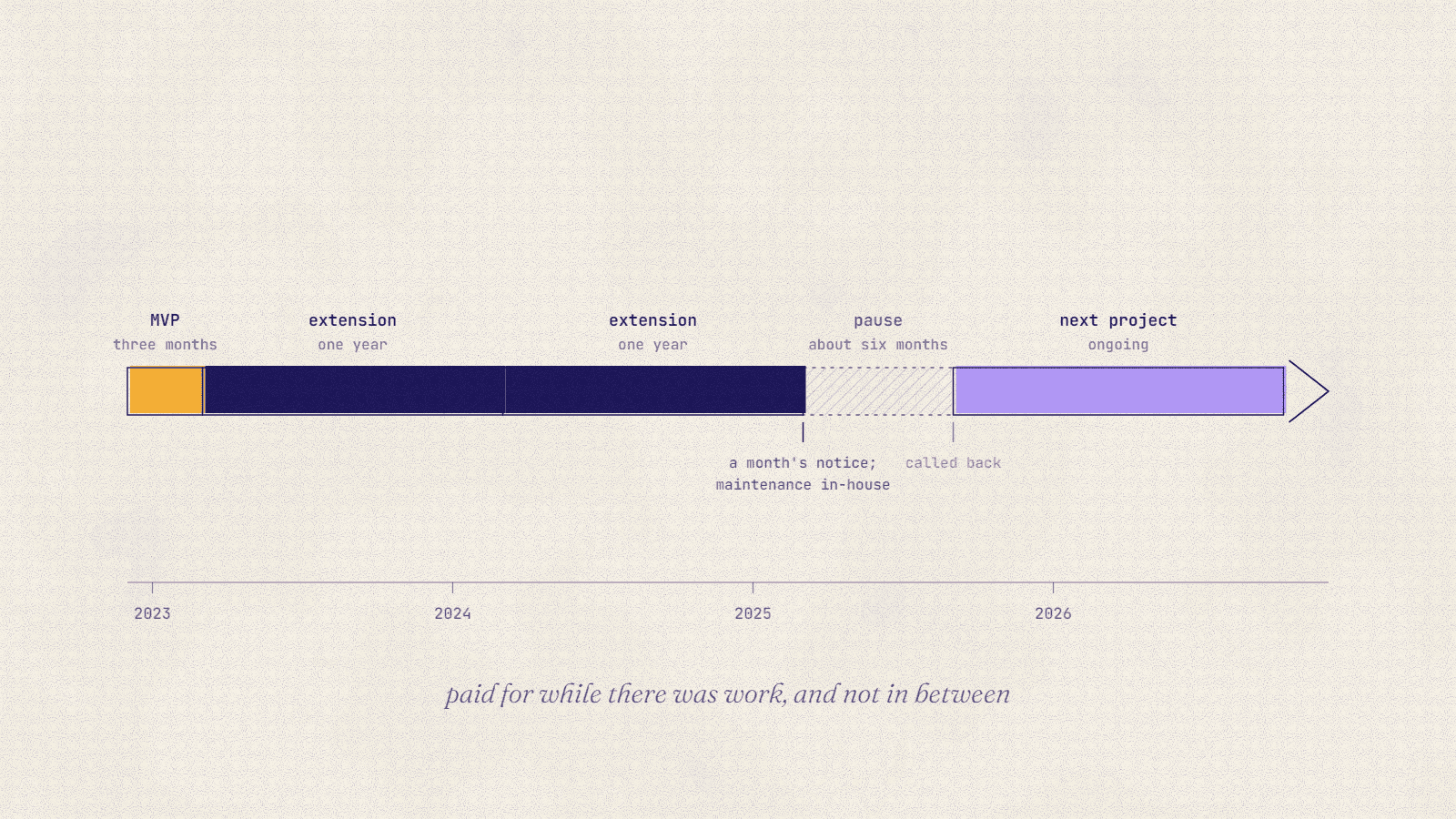
The terms were plain throughout: three months for the MVP, then two one-year extensions, with a month's notice to end it. When the work ran out, so did the invoices.

The engagement as a timeline: a three-month MVP, two one-year extensions, a month's notice and maintenance in-house in early 2025, a hatched pause of about six months, then the client calling back for a next project that is still running.
Fig. 03
Three months, then a year, then another, then nothing to pay for until there was work again. The next project will get its own case study.Diagram

Spread 07

One call away.

About six months later the client had more work, and called. We are on their next project now, and it will get its own case study when there is something to show.

That is the case for embedding rather than hiring, as it played out here: senior engineers for exactly the months a project needs, the same people from start to finish, and a way back in when there is more to do.

Working on something similar?

Submit a brief